
Georgios Panagopoulos MD | Orthopaedic Surgeon
Scapholunate injury

A scapholunate ligament tear is an injury to the ligaments of the wrist that affects the stability between two important bones of the wrist: the scaphoid and the lunate. This injury often occurs after a fall on the hand and is often initially treated as a simple sprain. However, when the ligament is torn, it can lead to persistent pain, weakness, and progressive instability of the wrist.
🔎 Key takeaways at a glance
- Scapholunate tear is one of the most common causes of chronic wrist pain following injury.
- It is often not diagnosed immediately, because initial x-rays may be normal.
- Early diagnosis is important, as chronic instability can lead to degenerative arthritis of the wrist.
- Wrist arthroscopy is in many cases the most reliable method of confirming the diagnosis.
- Treatment depends on the size of the tear and the time since the injury.
What is the scapholunate ligament?
The scapholunate ligament connects two small but important bones of the wrist:
- the scaphoid bone
- the lunate bone
Its role is to allow these bones to move in coordination and stably during wrist movements.
When the ligament is injured or torn, the two bones may begin to move abnormally relative to each other, causing what is called scapholunate instability.
How does the injury happen?
Common causes of scapholunate injury include:
- fall on the outstretched hand
- sports injuries
- motor vehicle accidents
- intense loading of the wrist
In many cases, the injury is initially treated as a wrist sprain, with the actual damage being recognized later.

What are the symptoms?
Common symptoms include:
- wrist pain, especially in the dorsal aspect of the wrist
- pain when putting weight on the arm (e.g. push-ups or support)
- sense of instability
- painful snapping or clicking inside the wrist
- reduced grip strength
In some cases, symptoms may initially be mild and appear weeks or months after the injury.
Why are these injuries misdiagnosed?
Diagnosis may be tricky because:
- plain X-rays may come back normal
- symptoms make you think of a simple wrist sprain
- even MRI may not be clear or miss the injury
For this reason, in cases of persistent wrist pain after an injury, examination by a specialized upper extremity surgeon is important.
How is it diagnosed?
Diagnosis of scapholunate injuries is based on:
- clinical exam
- X-rays
- MRI
In some cases, wrist arthroscopy is the most reliable diagnostic method, as it allows direct visualization of the ligaments within the joint.
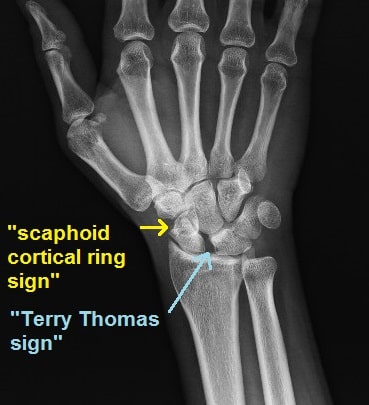
What are the treatment options?
Treatment depends on:
- severity of the injury
- time elapsed
- presence of instability
Conservative treatment
In some cases, initial treatment may include:
- immobilisation
- physiotherapy
- activity modification
Surgical Treatment
If the injury is significant or instability is present, surgical treatment comes into play, which may include:
- diagnostic & therapeutic arthroscopy
- ligament repair
- ligament reconstruction
The appropriate treatment is individualized depending on the characteristics of each case.
What if it is not addressed?
Neglected tears can, over time, lead to:
- wrist instability
- abnormal relative bone motion
- wrist arthritis (SLAC wrist)
Early diagnosis helps maintain wrist function and reduce the risk of permanent damage.
Summary
- Scapholunate tear is one of the most common causes of chronic wrist pain following injury.
- It is often misdiagnosed or missed, as X-rays are frequently normal.
- Delayed diagnosis may lead to wrist instability & arthritis.
- Proper clinical evaluation and appropriate tests are essential for choosing the appropriate treatment.
FAQs - Frequently Asked Questions
Can the scapholunate ligament heal on its own?
Minor or partial injuries can be treated conservatively. However, complete tears often require more specialized treatment.
Is surgery always necessary?
No. The need for surgical treatment depends on the severity of the tear, the instability of the wrist, and the patient's symptoms.
Is it frequently missed?
Scapholunate ligament injuries are among the most common causes of persistent wrist pain after a sprain, because they may not be visible on initial examination.
When should I see an expert?
If wrist pain persists for weeks after an injury or is accompanied by a feeling of instability or weakness, evaluation by a qualified physician is helpful.
Find us
Book an appointment with us today