
Georgios Panagopoulos MD | Orthopaedic Surgeon
Pectoralis major rupture

A pectoralis major tear is an injury in which the muscle or its tendon is partially or completely detached from its insertion on the humerus.
Key takeaways at a glance
- A pectoralis major tear is a serious upper limb injury with increasing incidence.
- It occurs most commonly in strength athletes, especially during weightlifting (bench press).
- It is frequently misdiagnosed as a simple muscle strain.
- MRI is essential for accurate diagnosis.
- Early surgical repair provides the best functional and cosmetic outcomes.
- Delayed or chronic tears are more difficult to treat.
Table of contents
What Is a Pectoralis Major Tear?
A pectoralis major tear is an injury in which the muscle or its tendon is partially or completely detached from its insertion on the humerus.
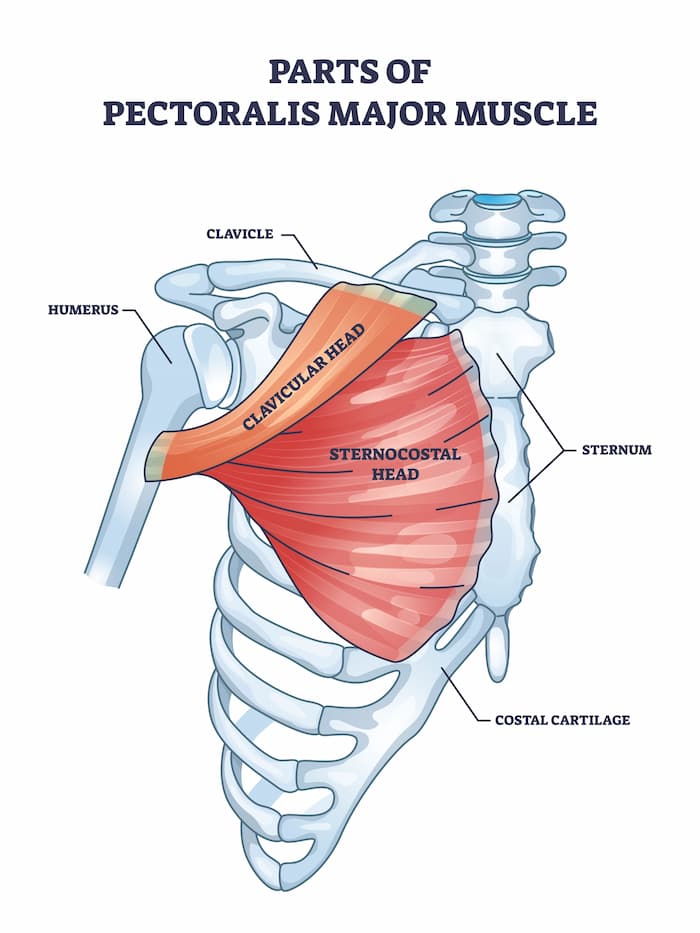
The pectoralis major is a large, powerful muscle that:
- stabilizes the shoulder
- contributes to arm adduction and internal rotation
- plays a critical role in pushing movements and upper limb strength
The integrity of the pectoralis major muscle is essential for upper limb strength, stability, and symmetry.
Who Is at Risk?
Pectoralis major tears occur most commonly in:
- men aged 20–50 years
- weightlifters and gym athletes
- CrossFit athletes
- professional strength athletes
- individuals using anabolic steroids, which increase tendon rupture risk
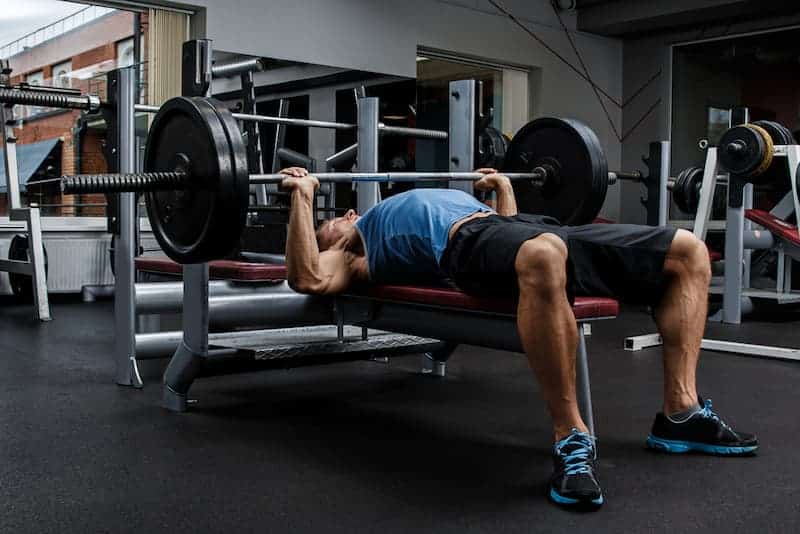
Increased muscle strength without proportional tendon adaptation raises the risk of tendon rupture.
Mechanism of Injury
The most common cause is a sudden eccentric load applied to the muscle when the shoulder is positioned in:
- abduction
- external rotation
- extension
Common scenarios include:
- Bench press during the lowering phase
- Sudden attempts to lift heavy weights
- Contact sports with forced shoulder abduction
- Falls onto an outstretched arm
Symptoms and Clinical Presentation
Symptoms are typically acute and characteristic:
- Sudden pain in the anterior chest
- A tearing or “pop” sensation
- Immediate loss of strength
- Bruising over the chest and upper arm
- Deformity or loss of the anterior axillary fold
- Chest asymmetry, especially visible during contraction
Loss of the anterior axillary fold is a classic sign of a complete pectoralis major rupture.
Types of Tears
The tear may involve:
- The muscle belly
- The musculotendinous junction
- The tendon (most common and most severe)
- Bony avulsion (rare)
Partial vs Complete Tear
- Partial tear: may be treated conservatively in selected cases
- Complete tear: usually requires surgical repair
Correct classification is critical for treatment planning.
Diagnosis
Diagnosis is based on:
Clinical exam
- Assessment of symmetry
- Strength testing
- Palpation of the tendon
Imaging
- Magnetic Resonance Imaging (MRI) – gold standard
- Επιτρέπει:
- εντόπιση της ρήξης
- εκτίμηση της έκτασης
- προεγχειρητικό σχεδιασμό
MRI is essential for definitive diagnosis and appropriate treatment planning.
Treatment Options
Conservative treatment
Considered in:
- partial tears
- patients with low functional demands
- individuals who decline surgery
Includes:
- immobilisation
- pain management
- physiotherapy
⚠️ Disadvantages: possible permanent weakness and cosmetic deformity.
Surgical Repair
Recommended for:
- complete tears
- athletes
- young and physically active individuals
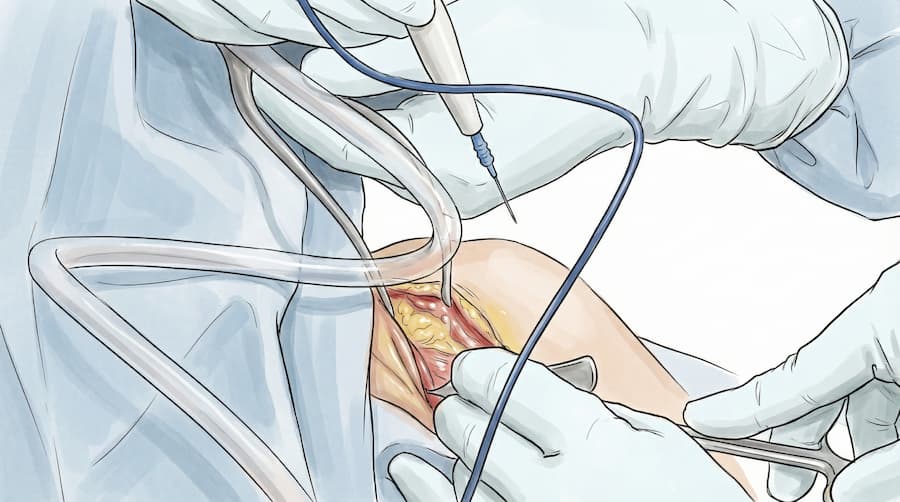
Surgery aims to:
- reattach the tendon to the humerus
- restore anatomy, strength, and symmetry
Early surgical repair provides the best functional and cosmetic outcomes.
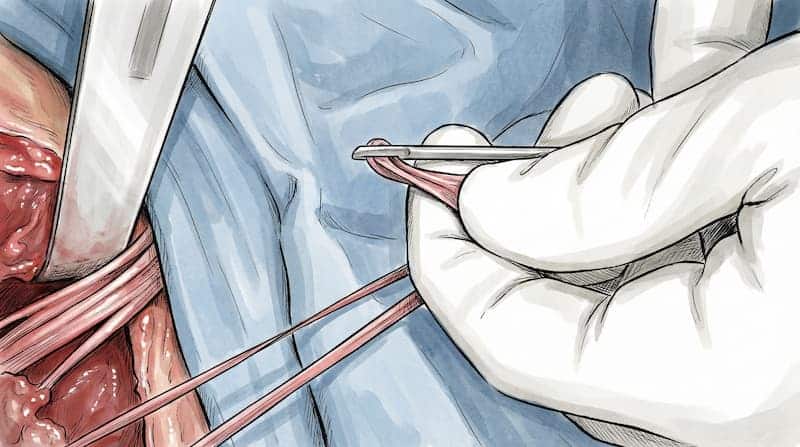
Chronic Tears
When diagnosis is delayed:
- the tendon retracts
- surgery becomes more complex
- grafts may be required
This is why early evaluation is crucial.
Rehabilitation and Return to Activity
Rehabilitation follows a structured, phased protocol:
- 0–6 weeks: protection and gentle mobility
- 6–12 weeks: restoration of range of motion
- 3 months: strengthening phase
- 4–6 months: return to weightlifting and sports
Key Facts - Pec major tears
- 🏋️ Most commonly occurs during bench press
- 🧠 Frequently misdiagnosed as a muscle strain
- 🕒 Time to diagnosis affects outcome
- 🔧 Surgical repair has high success rates
- ⚠️ Chronic tears are harder to treat
FAQs - Frequently Asked Questions
Is this a rare injury?
Yes, but its incidence is increasing due to the popularity of weightlifting.
Does it always require surgery?
No, but complete tears usually achieve better outcomes with surgical repair.
Can full strength be restored?
In most cases, yes — especially with early surgery and proper rehabilitation.
What happens if it is left untreated?
There is a risk of permanent weakness and visible asymmetry.
Why Is Specialist Evaluation Important?
A pectoralis major tear requires experience in upper limb injuries, expertise in sports-related trauma & appropriate surgical timing.
Find us
Book an appointment with us today